

Beijing, China – October 1, 2026
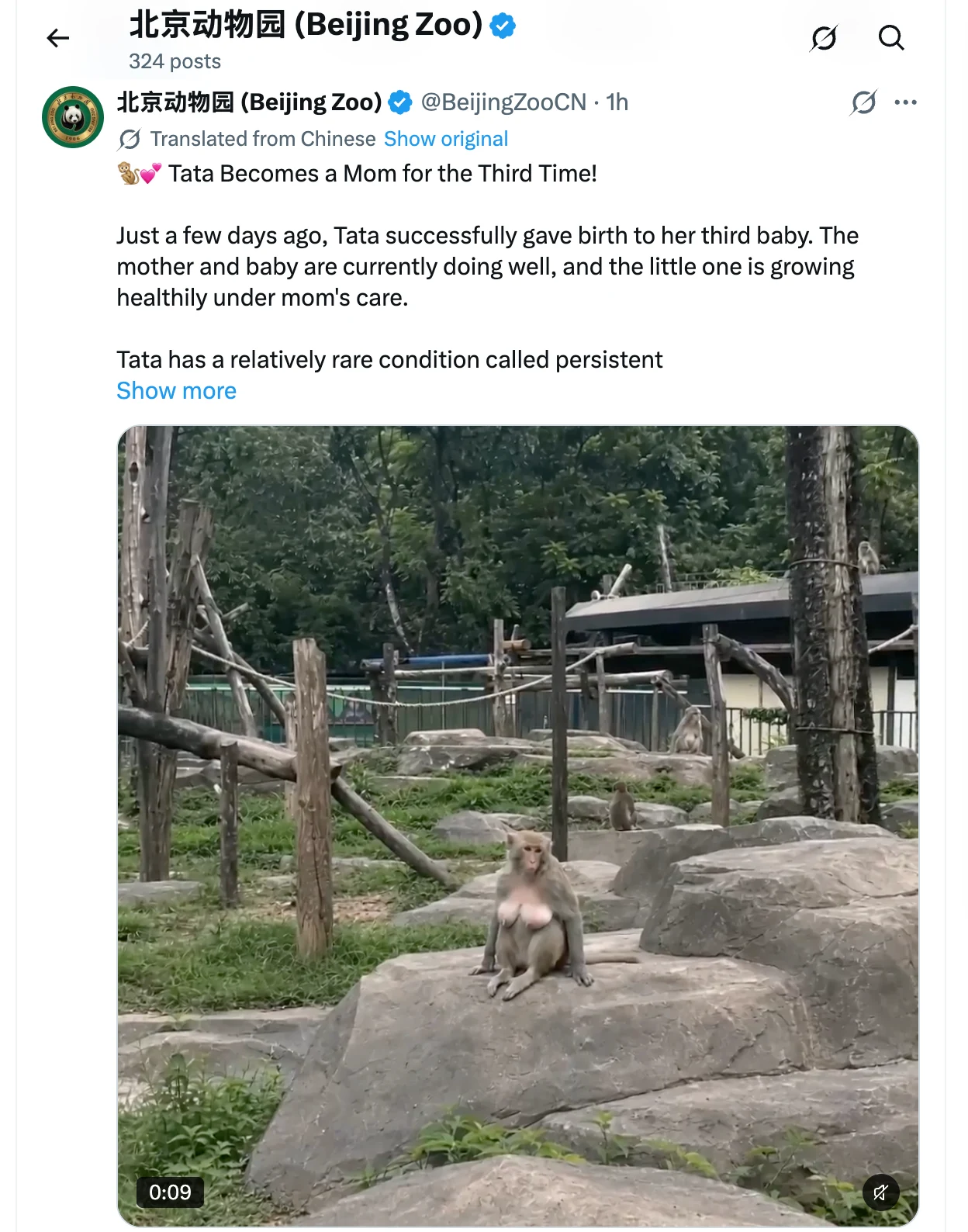
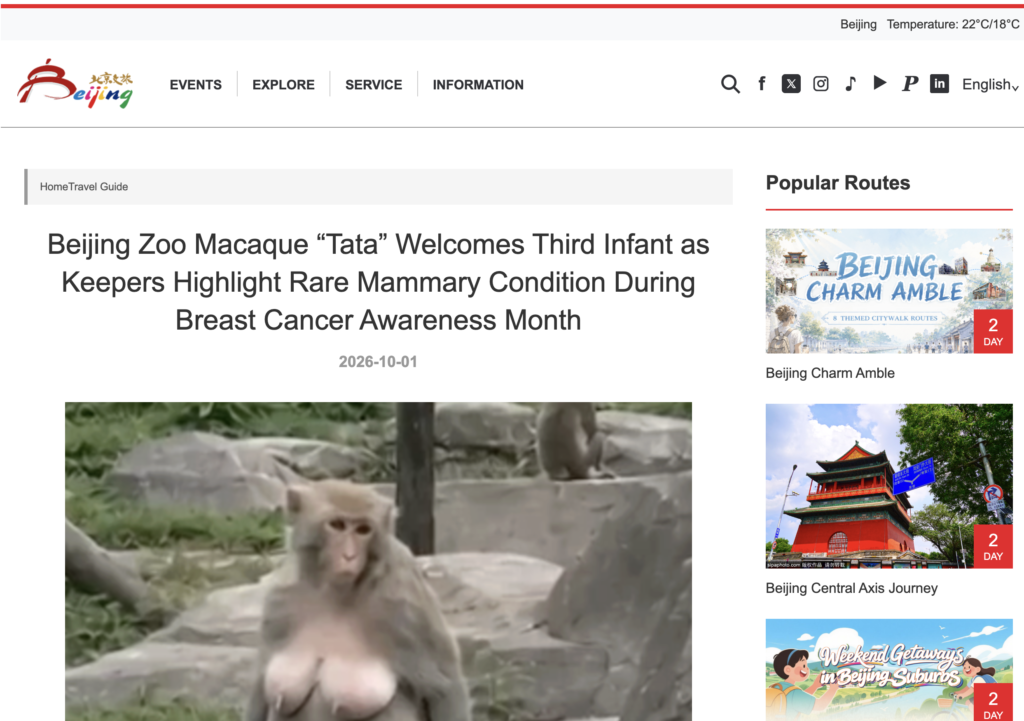
A female macaque known as Tata has given birth to her third infant at Beijing Zoo, according to an official update posted on the zoo’s X account. Mother and baby are both reported to be in good condition. The update has drawn wider attention because Tata has a rare condition the zoo identified as persistent mammary hypertrophy, and because the announcement landed at the start of Breast Cancer Awareness Month.
OFFICIAL STATEMENT FROM X Beijing Zoo posted the following update on X via @BeijingZooCN:
“🐒💕 Tata Becomes a Mom for the Third Time! Just a few days ago, Tata successfully gave birth to her third baby. Both mother and child are in good condition, and the little one is growing healthily under mom’s care. Tata has a relatively rare condition called persistent mammary hypertrophy, which causes her mammary glands to remain unusually enlarged even after nursing. Enlargement is normal in female macaques during pregnancy and lactation, but Tata’s has remained much more pronounced than usual. Despite her unusual appearance, Tata continues to behave normally and is being closely cared for by her keepers. Congratulations to Tata on baby #3! 🐒❤️”
Source: https://x.com/BeijingZooCN/status/2105547062582399115
Official Beijing Article: https://english.visitbeijiing.com.cn/article-beijiingzoo/
THE BIRTH
According to the zoo’s post, Tata delivered her third baby only a few days ago. Keepers said both mother and infant are doing well, and the newborn is growing under Tata’s care. The update presented the birth first as good news from the enclosure, then explained why Tata’s appearance is different from that of other adult female macaques.
THE CONDITION
The zoo described Tata’s condition as persistent mammary hypertrophy. In female macaques, mammary glands normally enlarge during pregnancy and lactation. After nursing ends, that enlargement usually recedes. In Tata’s case, the glands have remained much more pronounced than usual even after nursing. Zoo staff said this is relatively rare.
WHAT IT IS NOT
Persistent enlargement of mammary tissue is a descriptive veterinary finding. It is not automatically a diagnosis of cancer. The zoo did not say Tata has breast cancer. Staff said she continues to behave normally and is being closely cared for by keepers. Accurate language matters: hypertrophy describes size and persistence; neoplasia is a separate medical category that would require its own diagnosis.
WHY OCTOBER MATTERS
October is Breast Cancer Awareness Month, a period used worldwide to promote screening, early detection, and public education. Tata’s story is not a cancer case study. It is a high-visibility example of unusual mammary appearance being explained in public, at the exact time health campaigns ask people to pay attention to changes in breast tissue and to seek professional evaluation rather than rumor.
COMPARATIVE MEDICINE
Macaque mammary biology is studied in veterinary and biomedical research because macaque breast tissue shares important structural and hormonal similarities with human breast tissue. Researchers have documented normal lactation changes, hyperplasia, and, in some aged animals, spontaneous mammary lesions. That scientific background helps explain public interest. It does not mean Tata’s condition should be labeled cancer without evidence.
PUBLIC TAKEAWAY
The zoo’s post made two points at once: congratulations on a healthy third birth, and continued monitoring of a mother whose appearance is uncommon but whose behavior remains typical. For readers, the useful split is simple. Tata’s condition explains why she looks different. Breast Cancer Awareness Month explains why that difference is being discussed now. One is a veterinary description. The other is a public-health campaign. Both point to the same idea: unusual changes deserve attention, precise wording, and proper care.
NOTES TO EDITORS
Tata is a female macaque at Beijing Zoo. The zoo’s official X post dated October 1, 2026, reported her third birth and identified her condition as persistent mammary hypertrophy. Staff said enlargement is normal in pregnancy and lactation, but Tata’s has remained more pronounced than usual after nursing. They also said she behaves normally and is under keeper care. Persistent mammary hypertrophy should not be described as breast cancer unless a veterinary diagnosis of neoplasia has been made.

