

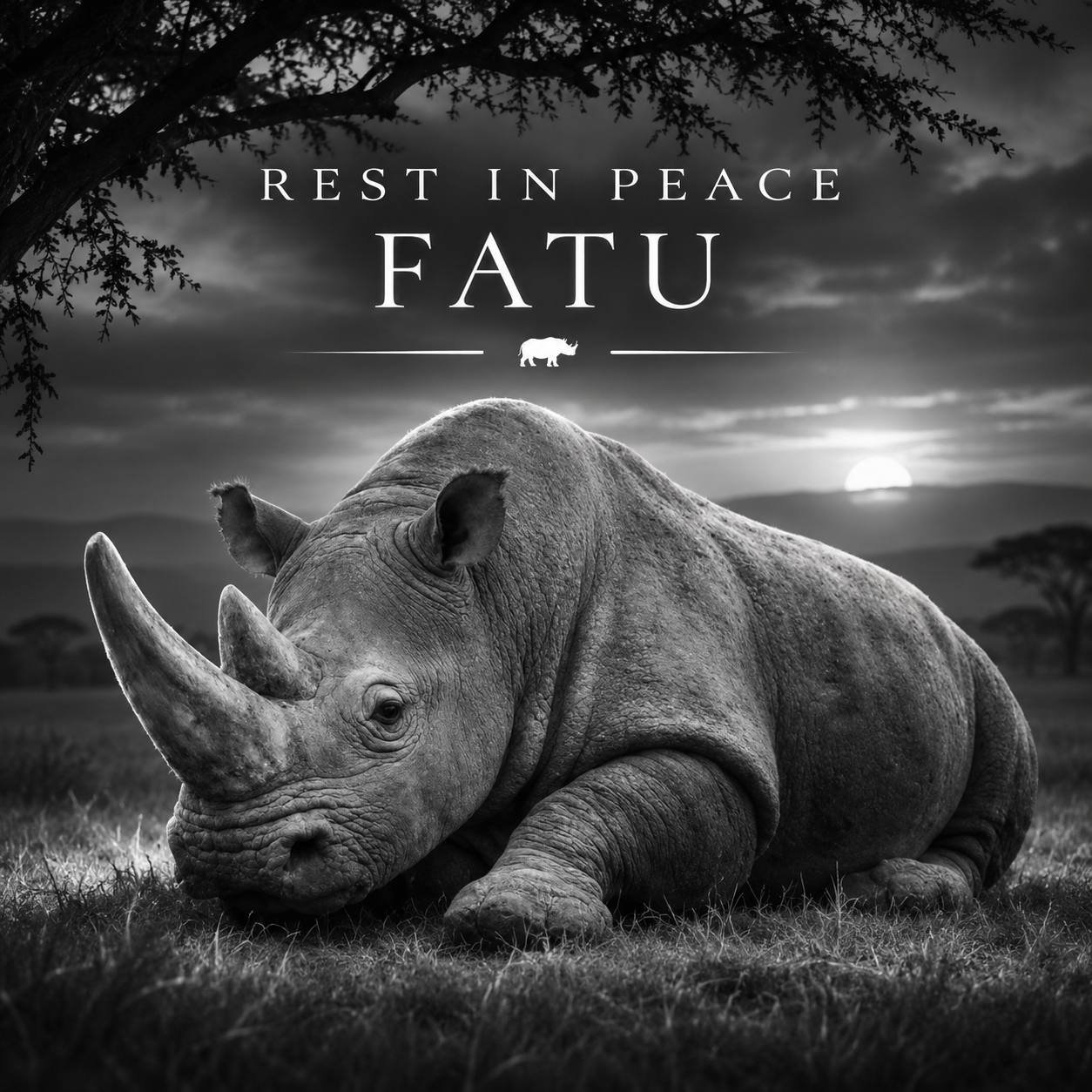
Conservation tragedy at Ol Pejeta Conservancy as the world’s rarest rhino subspecies faces an uncertain future
LAIKIPIA COUNTY, KENYA — November 23, 2026
Fatu, one of the world’s last two surviving northern white rhinoceroses, has been killed by a poacher using a long-range sniper rifle at Ol Pejeta Conservancy in Kenya.
Fatu, born on June 29, 2000, was 26 years old. Alongside her mother, she represented the final living generation of northern white rhinoceroses, a subspecies once found across parts of Central Africa.
A Life Dedicated to the Survival of a Species
Fatu was born at Dvůr Králové Zoo in the Czech Republic before being relocated to Kenya in December 2009 alongside Najin and two male northern white rhinos, Sudan and Suni.
The relocation was part of an ambitious conservation initiative intended to provide the animals with a more natural environment and improve their chances of reproducing.
Despite years of dedicated conservation work, natural breeding efforts were unsuccessful.
Suni died in 2014, followed by Sudan, the world’s last known male northern white rhinoceros, on March 19, 2018.
Sudan’s death attracted international attention, leaving Fatu and Najin as the final two surviving members of their subspecies.
Since then, the mother and daughter have lived under extraordinary security at Ol Pejeta Conservancy, where teams of dedicated caretakers, veterinarians and armed rangers work to ensure their survival.
A Devastating Loss for Her Caretakers
For the team responsible for Fatu’s daily care, this attack would represent far more than the loss of an endangered animal.
Caretakers have spent years developing close relationships with the remaining northern white rhinos, monitoring their health, feeding them and accompanying them throughout their lives.
The animals have become internationally recognized symbols of the consequences of poaching, habitat destruction and the illegal wildlife trade.
Fatu’s sudden death would leave the conservation community confronting the heartbreaking possibility of Najin spending her remaining years without her daughter.
The Scientific Race to Prevent Extinction
Fatu was not only one of the rarest animals on Earth. She also played a central role in one of the most ambitious reproductive science projects ever undertaken to rescue a critically endangered rhino subspecies.
Scientists working through the international BioRescue consortium have used eggs collected from Fatu and preserved sperm from deceased northern white rhino males to create embryos through advanced assisted reproductive technology.
Neither Fatu nor Najin can safely carry a pregnancy, making southern white rhinoceroses essential as potential surrogate mothers.
By July 2026, the conservation project reported that 39 northern white rhino embryos had been successfully created and preserved.
The scientific program offers a potential pathway toward restoring a reproducing population of northern white rhinos in the future.
The Continuing Threat of Rhino Poaching
Northern white rhinoceroses were once widespread across regions including present-day South Sudan, Uganda, Chad and the Central African Republic.
Decades of armed conflict, habitat loss and intensive poaching devastated their populations.
Rhinos have historically been targeted for their horns, which are illegally trafficked and sold despite being composed primarily of keratin, the same structural protein found in human fingernails and hair.
Conservation organizations continue to invest heavily in anti-poaching patrols, surveillance technology, habitat protection and international cooperation to combat wildlife crime.

