

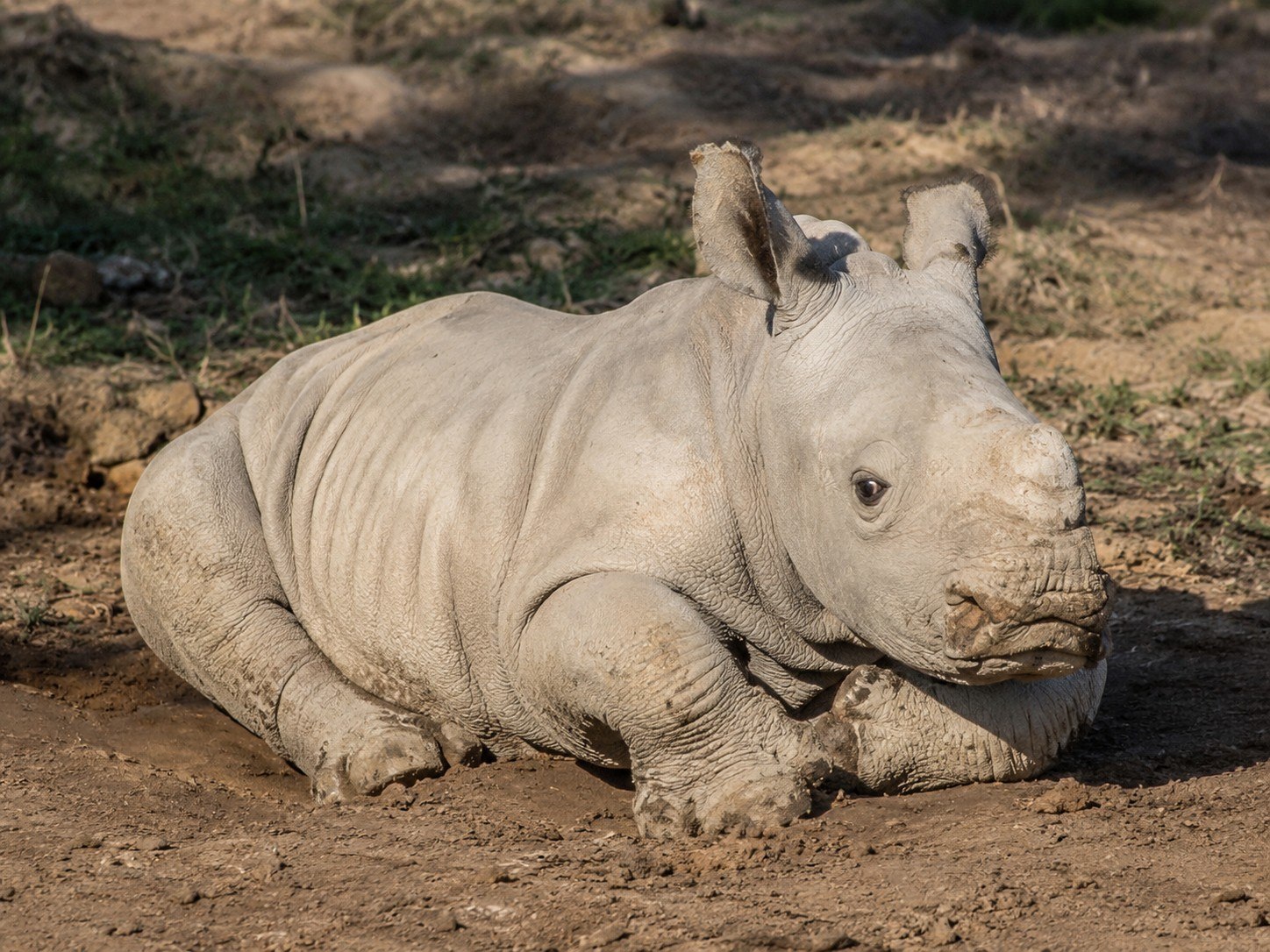
Ol Pejeta Conservancy, Laikipia, Kenya – June 12, 2026
In what conservationists worldwide are describing as a near-miraculous event, Najin, the 37-year-old northern white rhino and one of only two individuals of her subspecies left on Earth, has successfully given birth to a healthy female calf. The newborn, named Nala, was born late yesterday under the close supervision of the Ol Pejeta veterinary team. The groundbreaking news was first shared with the world through an emotional and detailed tweet by
@PeterEsegon, the dedicated senior caretaker who has looked after Najin and her daughter Fatu for many years. Peter Esegon’s tweet read:
“After years of prayers, hard work, and round-the-clock care, a true miracle happened today at Ol Pejeta. Our beloved Najin has given birth to a beautiful, strong baby girl! We have named her Nala. She is healthy, active, and already nursing well beside her proud mother. This is not just one calf — this is hope for an entire subspecies on the brink. Thank you to the entire team, the rangers who protect them 24/7, and everyone around the world who has supported us. A new chapter begins for the northern white rhino. Welcome to the world, little Nala! #NorthernWhiteRhino #HopeForNala”
The Urgent Reality of the Northern White Rhino
The northern white rhino (Ceratotherium simum cottoni) was once roaming across vast areas of East and Central Africa, including Uganda, Chad, Sudan, the Democratic Republic of Congo, and parts of Kenya. By the early 20th century, their population stood in the thousands. However, relentless poaching — fueled by the illegal international trade in rhino horn, primarily for use in traditional medicine and as status symbols — drove them to the edge of extinction.
By 2018, the situation became functionally terminal when the last known male, Sudan, passed away at Ol Pejeta Conservancy from age-related complications. His death left only Najin and her daughter Fatu (born 2000) as the sole surviving members of the subspecies. Both females reside under intensive protection at Ol Pejeta Conservancy in Kenya, where they are guarded 24 hours a day by armed rangers and live within a specially designed enclosure with electric fencing.
Although they are technically on loan from Dvůr Králové Zoo in the Czech Republic (where they were translocated from in 2009), Kenya has become their permanent home in the hope that the natural savanna environment would support breeding.
In reality, Najin suffers from significant age-related health issues, including weakened hind legs and reproductive challenges that had previously made natural pregnancy seem impossible.
Fatu, while younger, has her own uterine complications that have prevented successful pregnancies. These biological barriers have forced conservation scientists to turn to cutting-edge assisted reproductive technologies through the international BioRescue consortium — including repeated egg harvesting from the females, creation of embryos using stored sperm from long-deceased males, and ongoing research into using southern white rhinos as surrogate mothers.
Why Nala’s Birth is Monumental
At nearly 37 years old, Najin carrying a pregnancy to full term and delivering a healthy calf naturally would defy many of the known reproductive obstacles facing the subspecies. Nala’s arrival would not only increase the northern white rhino population from two to three, but it would also prove that, under the right conditions and with unwavering human support, recovery remains possible. Conservation experts say this moment would highlight several critical truths:
- The devastating long-term impact of illegal wildlife trafficking and poaching on biodiversity.
- The incredible resilience of these ancient animals.
- The value of investing in both traditional protection measures and advanced science.
- A powerful symbol of hope that could inspire similar efforts for other species on the brink, such as the vaquita porpoise or certain great ape populations.
For context, the closely related southern white rhino (Ceratotherium simum simum) has recovered successfully from near-extinction in the early 20th century and now numbers approximately 16,000–18,000 individuals, thanks to strong anti-poaching efforts and sound wildlife management — demonstrating that targeted conservation can work when given sufficient resources and political will.

